DESIGN
Vol.192

Strategic Designer
T.M.
Circular Economy and Circular Design — The Idea of “Designing” a Sustainable Future —
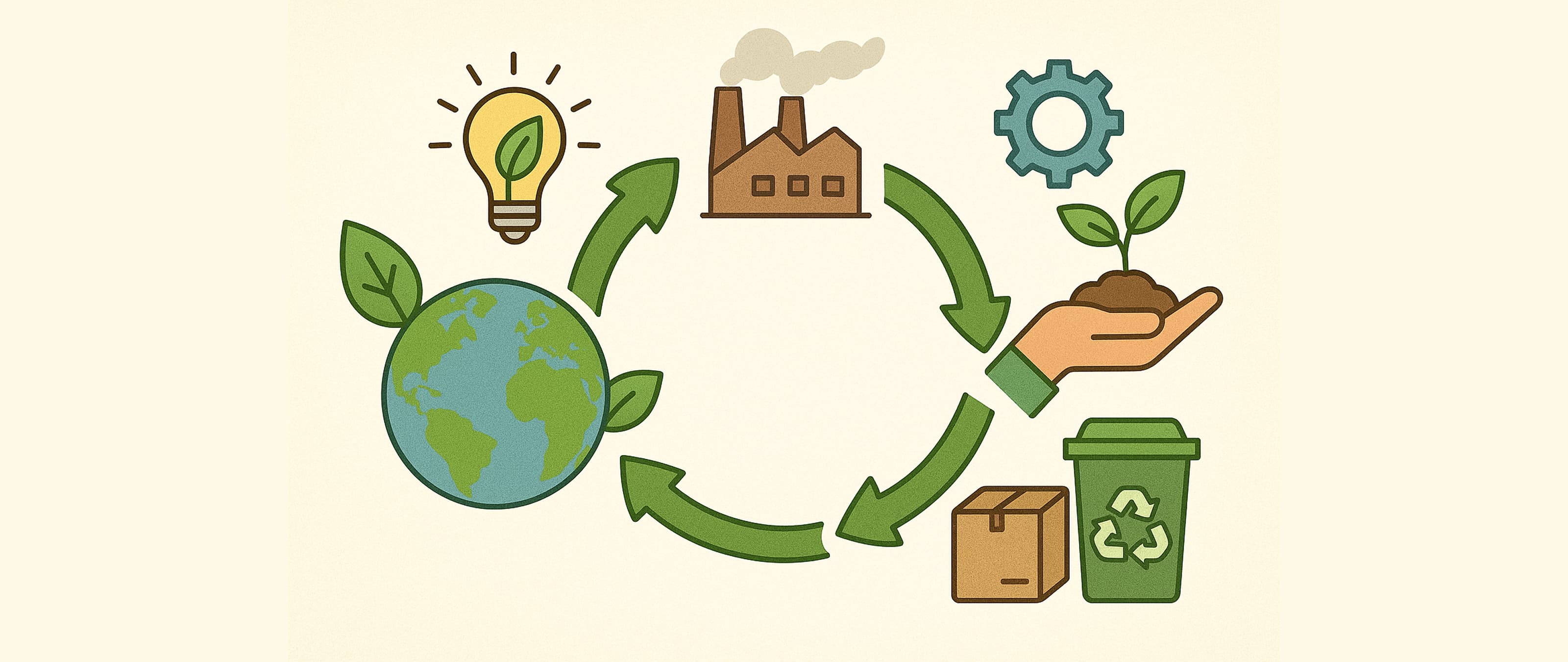
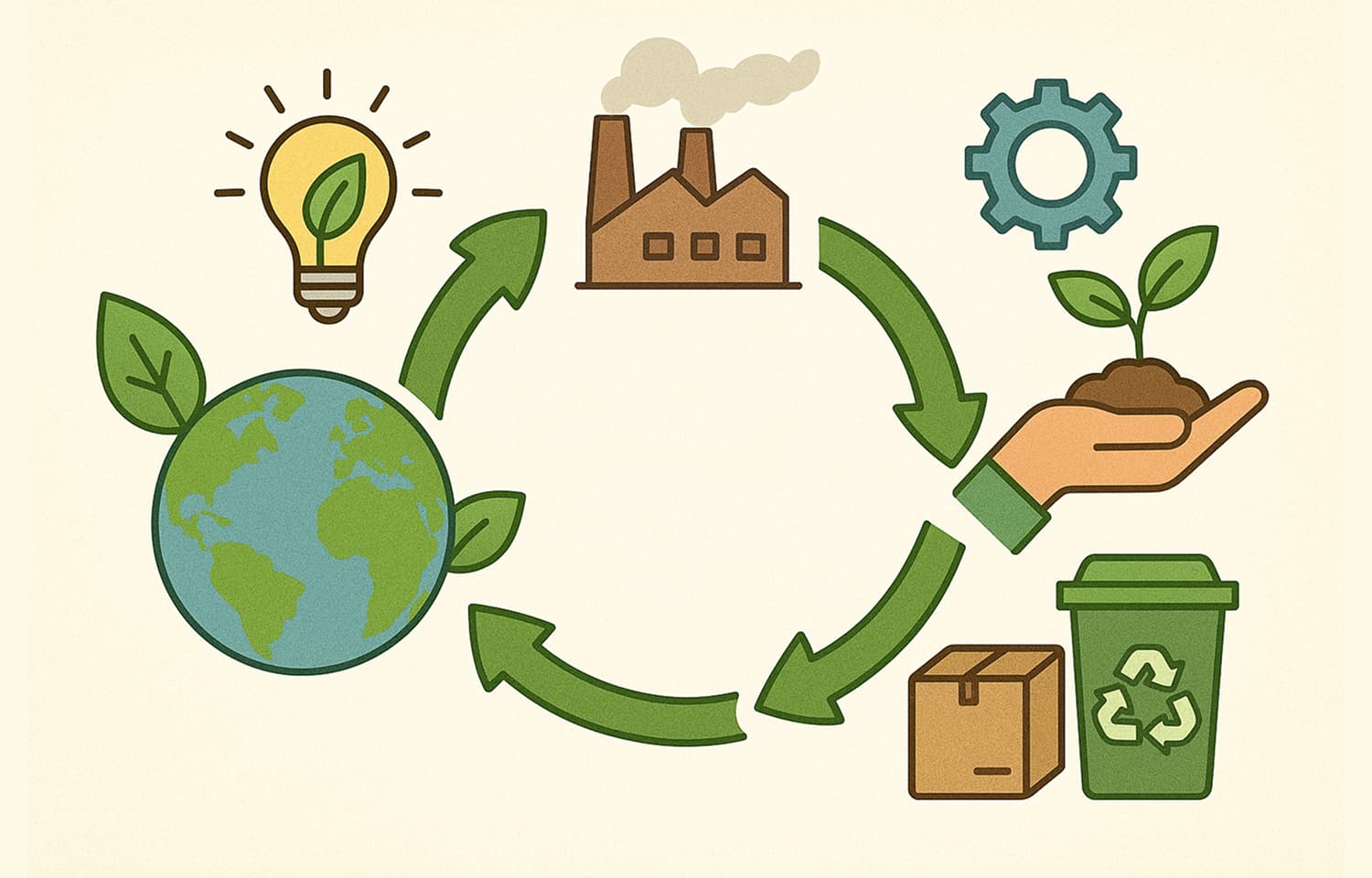
In response to these side effects, a new economic philosophy emerged—primarily in Europe—known as the Circular Economy. Its principle is simple yet transformative: keep materials and energy in circulation rather than discard them. Instead of “consuming” resources, we reuse, redesign, and regenerate them. This shift is giving rise to a new relationship between business, society, and design.
This article explores the idea of circulation as design—a concept shaping our collective future—through the following three perspectives: 1. The overall framework of the circular economy and sustainability 2. The connection between circular economy and design thinking 3. Practical perspectives on circular design
1.The essence of the circular economy
To understand circular design, one must first grasp the concept of the Circular Economy. In this section, we explore what it entails, the global context and market trends behind it, and the kinds of transformations that are being demanded of businesses today.
1-1. What Is the Circular Economy?
The Circular Economy is not simply about enhancing recycling. It is a philosophy for redesigning the economy, founded on the principle that “waste equals design failure.”
According to the Ellen MacArthur Foundation (UK), the Circular Economy is based on three key principles:
1. Design out waste and pollution
2. Keep products and materials in use for as long as possible
3. Regenerate natural systems
In other words, it is an approach to redesigning the entire lifecycle of production, distribution, consumption, and disposal on the assumption of continuous circulation.
1-2. Global Trends: The Acceleration of Policy and Market Shifts
In 2015, the European Union adopted the “Circular Economy Package,” introducing legislation to enhance product design, recycling rates, and waste reduction. In Japan, the Ministry of the Environment defined the concept in its 2023 report “Circular Economy Vision 2024” as follows:
“The Circular Economy is a new economic model that minimizes resource input and waste while achieving the decoupling of economic growth from environmental impact.”
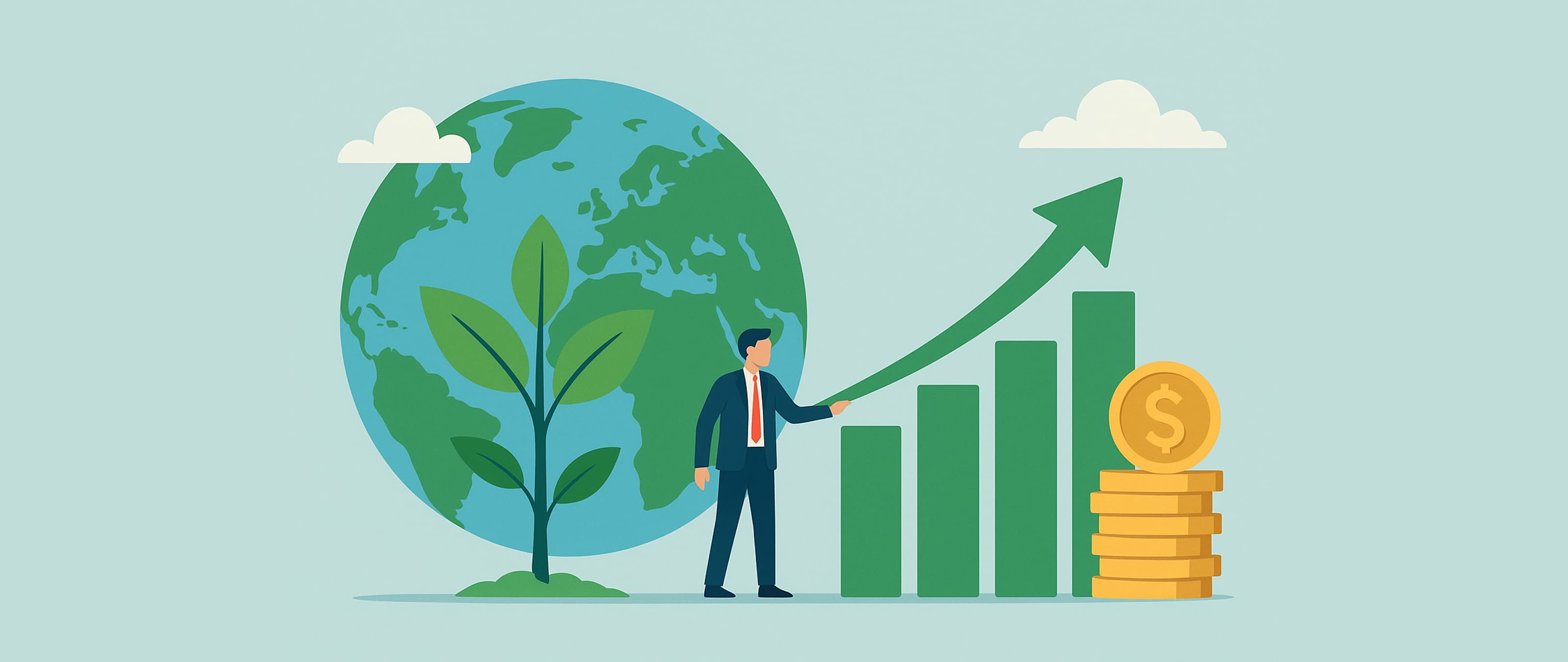
The term “decoupling” represents a new axis of competition—one that enables economic growth while reducing environmental burden. In this context, environmental responsibility is no longer a “cost,” but a “condition for growth.”
According to a report by PwC Japan (see references), companies implementing the Circular Economy are building competitive advantage in three key areas:
• Improved resource productivity
• Creation of new circular customer value
• Strengthening of brand trust through redesign
1-3. The Transformation Required of Businesses
Beyond traditional CSR (Corporate Social Responsibility), companies must now shift their entire management approach toward circularity. Executives are being challenged to ask three key questions:
1. Is this business sustainable under the constraints of global resources?
2. What potential value does this product hold after its initial use?
3. How can we integrate design principles that do not assume disposal?
These questions mark the true starting point for embracing circular design.
2.The Relationship Between Sustainability and Corporate Value
2-1. Redefining Sustainability
While “sustainability” is often translated as “持続可能性” (the ability to endure), it goes far beyond environmental considerations. It represents a comprehensive concept of optimizing corporate activity within the sustainable context of the planet and society.
Since the introduction of the SDGs (Sustainable Development Goals), global investors and consumers have increasingly focused on corporate performance in ESG—Environmental, Social, and Governance areas. According to PwC’s *Circular Economy Report 2024*, 76% of global investors state that they will not make long-term investments in companies that fail to consider sustainability.
2-2. Sustainability as a Source of Brand Trust Capital
Environmental responsibility is no longer merely an *ethical action*—it is *economic logic*. Companies that actively implement circular initiatives are realizing the following benefits:
| Category | Specific Benefits |
|---|---|
| Customers | Support for ethical consumption and stronger brand loyalty |
| Investors | Improved ESG ratings and attraction of long-term investment |
| Employees | Increased engagement and higher retention rates |
| Society | Industrial redesign and formation of co-creative ecosystems |
Thus, the “circular economy” and “brand value” are inseparably linked. In particular, Millennials and Gen Z tend to find value not only in *what* a product is, but in *how* it is made and *what purpose* it serves.
3. The Intersection of Circular Economy and Design Thinking
3-1. The Concept of “Designing” the Economy
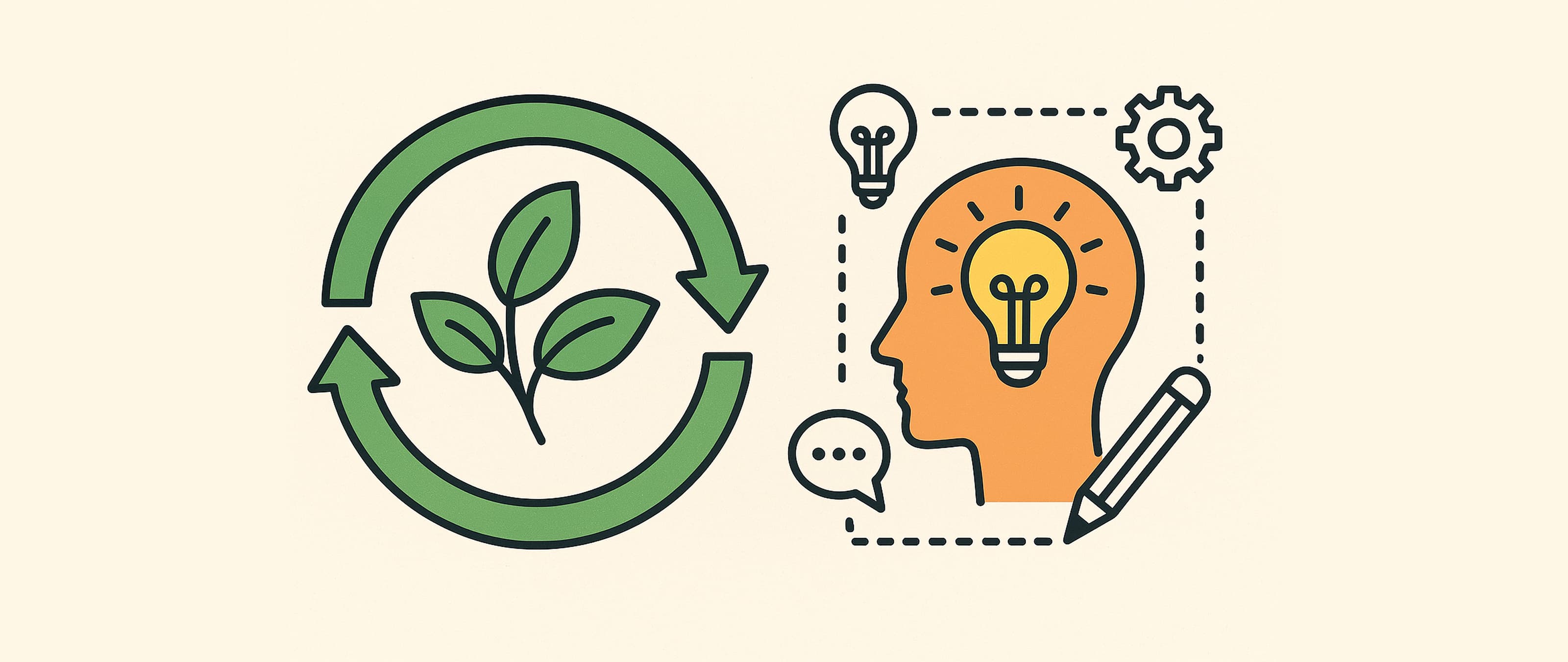
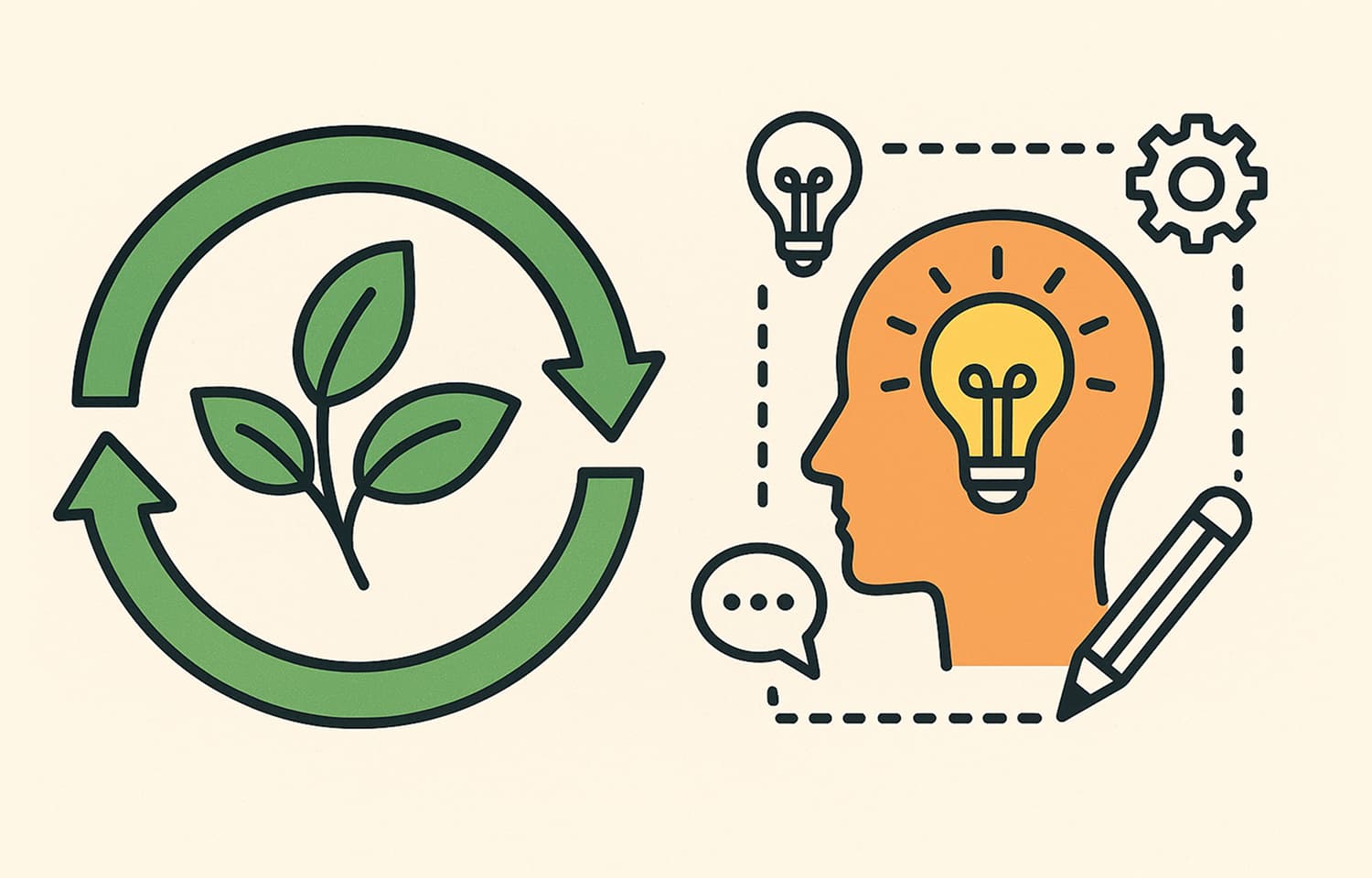
The most crucial concept for implementing a circular economy is *Circular Design*. Here, “design” does not merely mean shaping form—it refers to the holistic design of the economy, society, and experience.
IDEO’s Tim Brown introduced *Design Thinking* as a “human-centered approach to problem-solving.” In contrast, *Circular Design* expands this framework toward a “planet-centered approach to problem-solving (Planet-Centered Design).”
For more details on Design Thinking, see our previous article.
3-2. The Three Principles of Circular Design
① Regenerate
Design that restores rather than depletes natural capital. Example: Use of bio-based materials and renewable energy.
As the first principle of Circular Design, *Regenerate* represents a return to the origin of materials. Traditional industrial structures have consumed natural capital through resource extraction and manufacturing. Regenerative design reverses this logic—creating mechanisms that restore the natural environment as a foundation for future production.
Examples include developing biomaterials from agricultural waste, using renewable energy in production processes, and building supply chains that assume forest regeneration as part of their design.
For companies, the key is shifting their focus from “reducing environmental burden” to “creating environmental value.” Regeneration is not merely an ecological activity—it is a strategic management act that redefines future supply capacity.
② Reuse
Redesign products to create systems that keep them in use. Example: Reuse, refurbishment, and remake businesses.
Designing for reuse means embedding structures within business operations that prevent products from becoming “single-use” items.
Crucially, this is not just about reselling or repairing—it is about *designing reasons to keep using*. This includes rethinking user experience and distribution systems, redefining product longevity itself as a form of value.
Examples include refurbishment services for electronics or furniture, upcycling initiatives in the apparel industry, or subscription-based models that shift consumption from “ownership” to “use.”
Such initiatives not only reduce waste but also build long-term relationships between brands and customers. Designing with reuse in mind ultimately enhances brand trust and social value.
③ Rethink
New business models that prioritize use over ownership. Example: Subscription, sharing, and Product as a Service (PaaS).
*Rethink* is the process of questioning not only *what* we make, but *how* we deliver value.
In Circular Design, Rethink extends beyond redesigning products—it involves reconfiguring entire business models as systems of circulation.
Examples include subscription-based services that transition from ownership to usage, sharing models that distribute resources among multiple users, and “Product as a Service (PaaS)” models that provide products as ongoing services.
These systems not only transform a company’s revenue structure but also deepen customer relationships—from transactional to co-creative. Rethink represents the core principle of Circular Economy, embedding the “circulation of value” into the very foundation of business design.
Together, these three principles demonstrate that *design drives the economy.* In other words, the circular economy can only be realized through design.
4. Principles of Circular Design in Practice
4-1. Building “Circularity” into the Design Stage
The defining characteristic of circular design is that design becomes the starting point for everything. In other words, products are conceived by working backward from the end of their lifecycle.
This approach is known as Design for Circularity—designing products and systems with their entire lifecycle in mind, including reuse, repair, remanufacturing, and recycling from the very beginning.
| Perspective | Key Design Questions |
|---|---|
| Materials |
Can these materials be reused or regenerated? Can they circulate within a local system? (e.g., using biomass or single-material components, sourcing locally to shorten recovery loops) |
| Manufacturing |
How can waste or by-products from the manufacturing process be reused? (e.g., converting by-products into other products, reusing energy, designing low-waste production processes) |
| Distribution |
Can product recovery or resale routes be secured at the design stage? (e.g., introducing return bags or portals, optimizing logistics, packaging that supports secondary distribution) |
| Use |
Is the product designed for repair and reuse? (e.g., modular structures, standardized replacement parts, easy disassembly and diagnostics) |
| End-of-life |
Instead of disposal, are there pathways for reintegration into the system? (e.g., material recovery networks, compatibility with chemical recycling, closed-loop design) |
By incorporating these kinds of questions into the design stage, it becomes possible to reduce the very concept of waste itself. In other words, environmental considerations are not something added later in the process—they are designed in from the very beginning.
4-2. The Role of Design in “Visualization” and “Storytelling”
Another key principle of circular design in practice is the ability to make circular concepts visible and communicable. No matter how well a circular system is designed, if its meaning is not understood by customers or employees, behavior will not change.
Design acts as a translator between information and emotion. Materials used in a product, distribution pathways, regeneration processes, and social impact—when these elements are expressed as a coherent story, they become a new source of trust for a brand.
For example, the Nordic furniture company IKEA promotes its strategy called “People & Planet Positive.” Under this framework, the company publicly discloses information about products made with recycled or renewable materials in a traceable format online.
Rather than simply stating that a product has “low environmental impact,” IKEA designs the story of how recycled materials circulate through the system as part of the customer experience itself.
4-3. Four Types of Circular Business Models
According to materials from PwC Japan and the Ministry of the Environment of Japan (see reference materials), the business models that support a circular economy can be classified into the following four types.
| Type | Overview | Representative Companies |
|---|---|---|
| Resource Circulation Model | A model that minimizes resource input by reusing materials and resources. Emphasizes material circulation and the use of recycled materials. | Patagonia (recycled polyester), Ricoh (toner cartridge recycling) |
| Product Life Extension Model | Extends product lifespan through maintenance and repair. Encourages longer usage through repair and upgrade services. | Dyson (repair support), MUJI (repair services) |
| Service-Based Model | Shifts from ownership to usage to increase product utilization rates. Typically based on subscription or rental services. | IKEA (furniture subscription), Panasonic (appliance leasing) |
| Remanufacturing & Resale Model | Reconstructs product value through refurbishment and second-hand resale. Reduces waste while activating secondary markets. | Apple (certified refurbished products), IBM Japan (remanufactured servers) |
As this table illustrates, circularity functions as a redefinition of value across industries, regardless of sector.
5. Designing Circularity: Insights from Leading Cases in Japan and Around the World
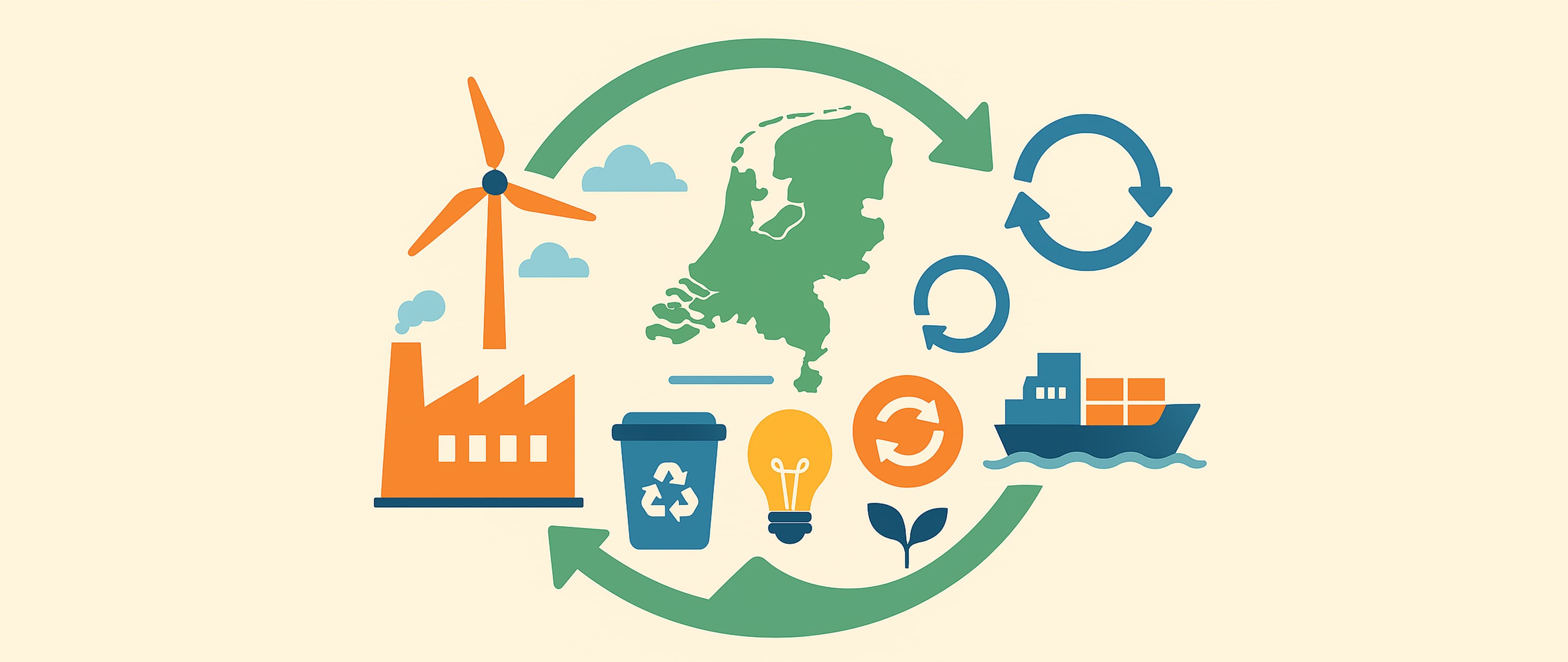
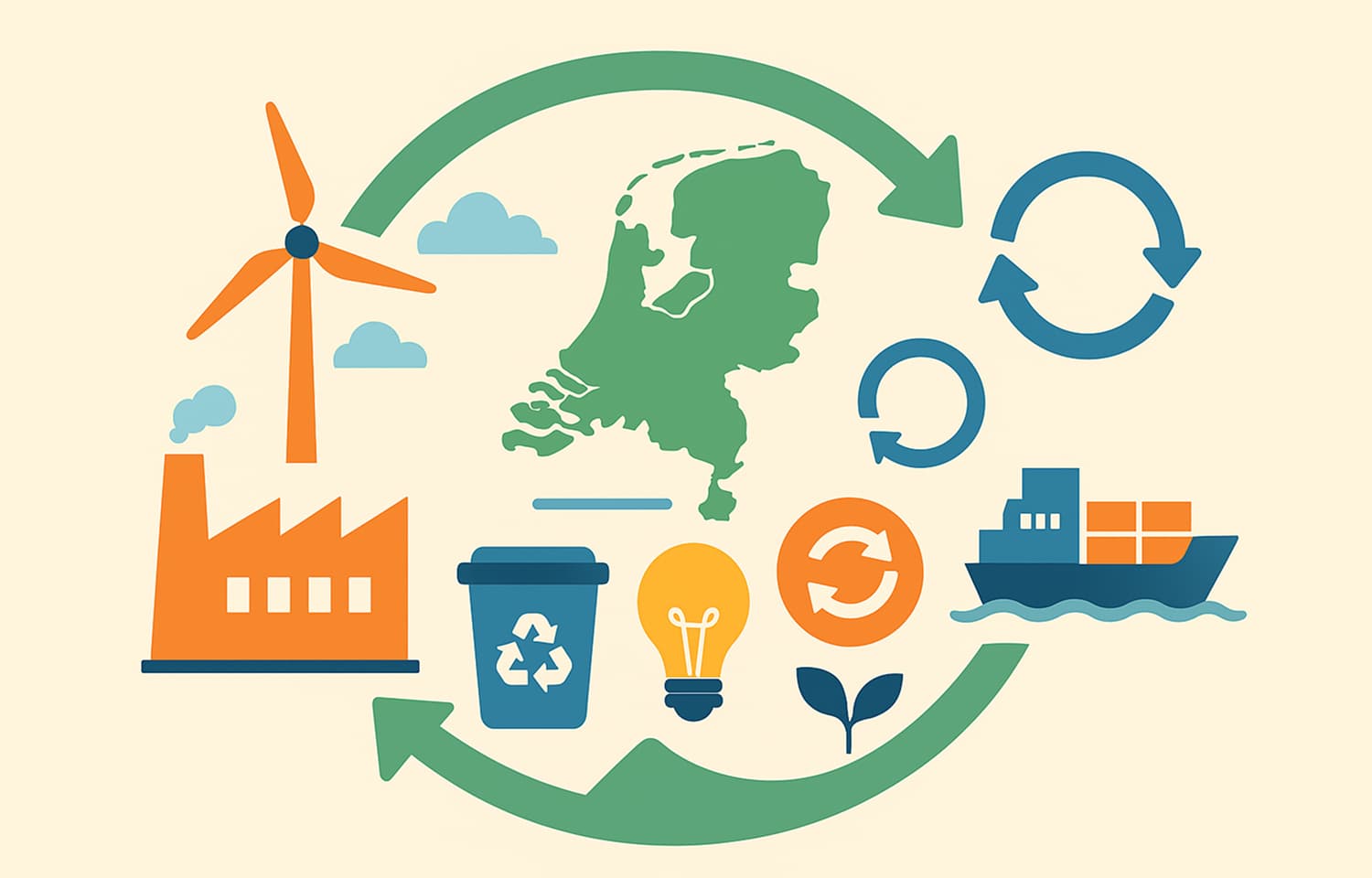
5-1. The Netherlands: A Circular Economy as National Strategy
The Netherlands has set a national goal of transitioning to a fully circular economy by 2050, promoting design transformation across industries such as architecture, agriculture, and manufacturing. One particularly notable initiative is the introduction of “material passports” in the construction sector. A material passport is a system that records information such as the composition, lifespan, and recyclability of building materials in a database, making future reuse easier.
In this approach, buildings themselves are designed as “repositories of resources.”
Rather than being treated as future waste, materials are designed as resources for the future—a concept that clearly embodies the philosophy of circular design.
5-2. Trends Among Japanese Companies: Insights from a JETRO Report
According to a report by JETRO (see reference materials), several key challenges remain in advancing the circular economy in Japan:
1. Insufficient data sharing across the entire supply chain
2. Difficulty in encouraging changes in consumer behavior
3. Financial and human resource constraints among small and medium-sized enterprises (SMEs)
At the same time, an increasing number of companies are beginning to overcome these challenges. The following examples illustrate how several firms are implementing circular initiatives:
・Unicharm: Recycles used disposable diapers and converts them into new hygiene products.
・Bridgestone: Develops circular production models using recycled rubber.
・Panasonic: Integrates product collection, reuse, and material recycling within its appliance design and recovery systems.
A common feature across these initiatives is that they are not merely environmental responses, but rather circular strategies embedded within corporate management and business design.
5-3. Competitive Advantage Through Circularity
In its report, PwC presents a four-stage model for assessing the maturity of the circular economy.
| Stage | Organizational State | Characteristics |
|---|---|---|
| Level 1 | Compliance | Regulatory compliance and CSR level. Implements minimum compliance requirements and reporting obligations. |
| Level 2 | Efficiency | Focus on resource efficiency and cost reduction. Promotes efficiency through process improvements and energy savings. |
| Level 3 | Innovation | Creation of new businesses and services. Develops business models that leverage sustainability. |
| Level 4 | Transformation | Redesign and redefinition of the entire management structure. Transforms the organization, including governance, strategy, and talent. |
At the top of this pyramid is “Transformation,” the stage at which circular design becomes central to corporate transformation. In this phase, circular practices are no longer treated merely as environmental initiatives; they evolve into a strategic approach to organizational and business design.
6. Steps for Integrating Circular Design into Management
Step 1: Define a Vision at the Executive Level
Advancing the circular economy requires a clear commitment from top management. This is not merely an environmental policy but a redefinition of the company’s purpose and reason for existence.
Japan’s Ministry of the Environment, in its Circular Economy Vision (see reference materials), states:
“Realizing a circular economy requires the reconstruction of the entire socio-economic system and cannot be achieved by a single company alone. Co-creation across the ecosystem is essential.”
In other words, a circular economy cannot be completed by one organization alone; it requires the redesign of relational capital across industries and stakeholders.
Executives are therefore expected to articulate this capacity for co-creation as a design vision for the organization.
Step 2: Map the Entire Value Chain
Next, companies need to visualize their value chain from a circular perspective.
One useful approach is to design a Circular Value Map, such as the following:
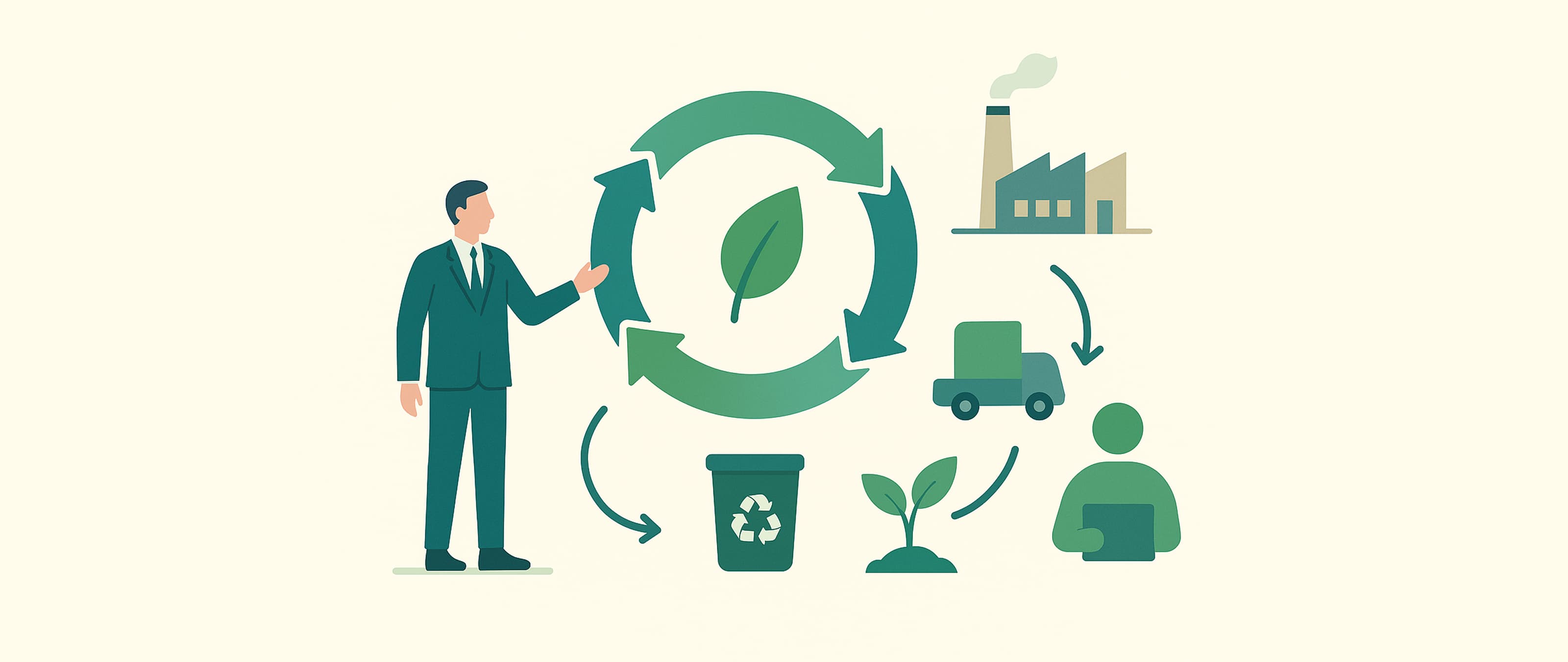
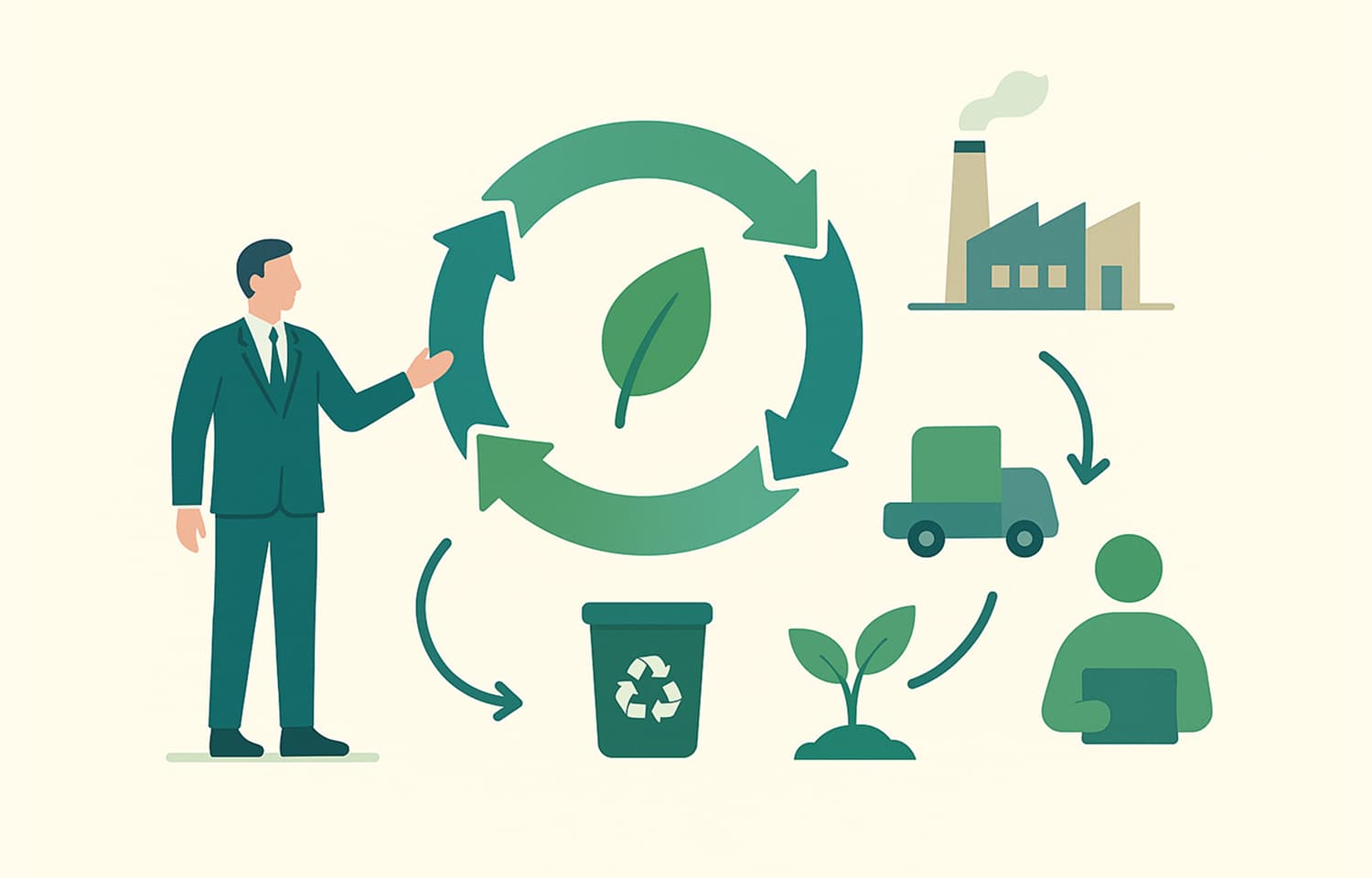
Procurement ─ Manufacturing ─ Distribution ─ Use ─ Collection ─ Regeneration ─ Reintroduction
↓ ↑
(Information, materials, and energy circulate throughout the system)
By mapping the system in this way, organizations can identify where waste is generated and where opportunities for reuse exist. At the same time, this process reveals potential collaboration opportunities with partner companies and local communities.
Step 3: Integrate Circular Design into the Development Process
To incorporate circular design into product and service development, it is necessary to involve not only design teams but also management, procurement, and marketing in a unified approach. A representative method is the Circular Design Sprint.
This process involves rapidly creating prototypes and testing the entire circular system—from materials and logistics to reuse and end-of-life recovery. The approach has been adopted by organizations such as Google, IDEO, and Delft University of Technology, and its use is gradually expanding among Japanese companies.
Step 4: Translate Circularity into the Brand Experience
Ultimately, the philosophy of circular design must be reflected in the brand experience itself.
Rather than framing sustainability as simply “buying environmentally friendly products,” companies should design experiences in which customers participate in the cycle of regeneration.
For example, the apparel brand THE NORTH FACE operates a customer-participatory program that collects used garments, recycles them, and transforms them into new clothing
In this way, providing experiences where customers become active participants in circular systems is increasingly becoming a defining characteristic of next-generation brands. Integrating circular design therefore goes beyond improving environmental performance or refining product design. It involves embedding principles of regeneration and co-creation at the core of corporate management.
In Step 1, executives redefine the organization’s purpose by articulating a vision of value circulation through co-creation.
In Step 2, that vision is translated into concrete action by redesigning the value chain as a circular system.
In Step 3, development processes incorporate iterative thinking—prototype, test, reuse—to stimulate cross-organizational innovation.
Finally, in Step 4, these principles are expressed through customer experiences, transforming the act of “buying” into participating in a cycle of value creation.
Viewed as a whole, this process represents not merely environmental compliance but the strategic design of a new ecosystem for value creation.
Through the adoption of circular design, companies can redefine sustainability not as a cost, but as a source of competitive advantage.
The future of management will no longer be defined by the consumption of finite resources. Instead, growth will be driven by the ability to circulate relational capital, social value, and customer experience within a regenerative system.
Conclusion: Designing a Sustainable Future
The circular economy is not only about the circulation of materials, but also about the circulation of meaning. It invites us to move away from the linear divisions that separate makers and users, businesses and society, the past and the future, and instead to draw a circle of relationships that connects them. This practice lies at the very heart of circular design.
Given the many environmental challenges we already face today, the business models of the future must be designed around the idea of growth within the limits that the planet can sustain. For this reason, we must learn how to use the power of design to make the economy circulate in a more balanced and elegant way.
This requires us to reconsider fundamental questions: Is the traditional model of scale-driven economic growth still appropriate? What kind of economy and way of living should we create going forward? Circular design is ultimately a process of reimagining and redesigning these foundations.
And the driving force behind this transformation is not profit alone. Rather, it is the vision and hope that emerge from regeneration.
References
・PwC Japan Group『Circular Economy Report 2024』
・Ministry of the Environment, Japan, Circular Economy Vision 2024
・JETRO, Trends in the Circular Economy in Europe and Prospects for Japanese Companies (2024)
・Ellen MacArthur Foundation “What is a Circular Economy?”
・IDEO “The Circular Design Guide”
RECENT POSTS

Vol.198
From parent–child bonds to community: The future of education that nurtures diversity and designs relationships

Vol.197
Exploring the future of environmental design integrating vision, diversity, and a future-oriented perspective

Vol.196
Vision-making for diverse and future-oriented education: Interpreting the future of learning through environmental design

Vol.195
“One Health” and Japan — Toward an Era of Integrating Humans, Animals, and the Environment

Vol.194
The benefits and challenges of digital education in the AI era, and the future of learning

Vol.193
Vision-Making in the age of AI — How artificial intelligence is transforming the meaning of work and the nature of organizations
TRENDING

Vol.164
Steps and strategies for internal branding to enhance employee engagement

Vol.160
What Small and Medium-sized Enterprises Should Do About Employer Branding

Vol.159
ユーザー行動をデザインする|UXの心理学と行動変容
INDEX
1.The essence of the circular economy
2.The Relationship Between Sustainability and Corporate Value
3. The Intersection of Circular Economy and Design Thinking
4. Principles of Circular Design in Practice
5. Designing Circularity: Insights from Leading Cases in Japan and Around the World
6. Steps for Integrating Circular Design into Management
Conclusion: Designing a Sustainable Future