TECH
Vol.99

L.D.
7 common English mistakes often made by Japanese speakers
Common Spelling Mistakes and Points of Confusion
To begin with, what causes spelling mistakes in English?
In web production, benchmarking is essential for creating high-quality websites, and through our daily work, we have reviewed a wide range of sites—from competitors to companies in entirely different industries. In doing so, we have often come across Japanese websites that use incorrect English expressions.
No matter how refined the design may be, the use of incorrect expressions can undermine the overall impression of a site and may even invite criticism from those who are proficient in English. This is quite unfortunate. To ensure that the effort put into creating a website is not wasted, it is important to be mindful of correct expressions from the outset.
In Japanese, foreign words are often written in katakana, but these katakana representations frequently differ from native pronunciation. One of the main causes of spelling mistakes is writing these katakana words directly in romanized form without understanding the difference. Additionally, since many English sounds do not exist in Japanese, it is easy to become confused when trying to spell such words.
Now, let us take a closer look at some commonly confused points and examples.
1. Confusing “e” and “i”
| よくあるスペルミス | 正しいスペル | 日本語表記 |
|---|---|---|
| ivent | event | イベント |
| degital | digital | デジタル |
| all rights riserved | all rights reserved | 著作権表示 |
「e」と「i」は非常に書き間違えやすい文字です。「event」の「e」は「i」と発音し、「reserved」の「re」は「ri」と発音します。カタカナでも「イベント」、「リザーブ」と書きますので、混乱しやすいです。「digital」も同じように、発音で「ディジタル」としますが、カタカナで「デジタル」と書きます。カタカナの発音のままで書くと、間違います。カタカナの発音が英語と同じ場合もあり、違う場合もありますので、気をつけましょう。
2. Confusing “b” and “v”
| よくあるスペルミス | 正しいスペル | 日本語表記 |
|---|---|---|
| nabigation | navigation | ナビゲーション |
| ebent | event | イベント |
日本語には「v」の発音がありませんが、カタカナで書くときは「ヴ」か「ブ」と書きます。ローマ字で書くときは「ブ」を「b」と書くと、スペルミスになってしまいます。
3. Confusing “l” and “r”
| よくあるスペルミス | 正しいスペル | 日本語表記 |
|---|---|---|
| bland | brand | ブランド |
| lental | rental | レンタル |
| pubrish | publish | パブリッシュ |
| copylight | copyright | コピーライト |
| crient | client | クライアント |
| site poricy | site policy | サイト利用規約 |
| reflesh | refresh | リフレッシュ |
日本語に「l」と「r」という子音は存在しません。日本語には、これに対応するものに「ら行」しかないため、日本人は英語の「l」と「r」の区別ができないことが多く、「l」と「r」の書き間違いもよくあります。
4. Confusing “e” and “a”
| よくあるスペルミス | 正しいスペル | 日本語表記 |
|---|---|---|
| intarview | interview | インタビュー |
| sarvice | service | サービス |
| treining | training | トレーニング |
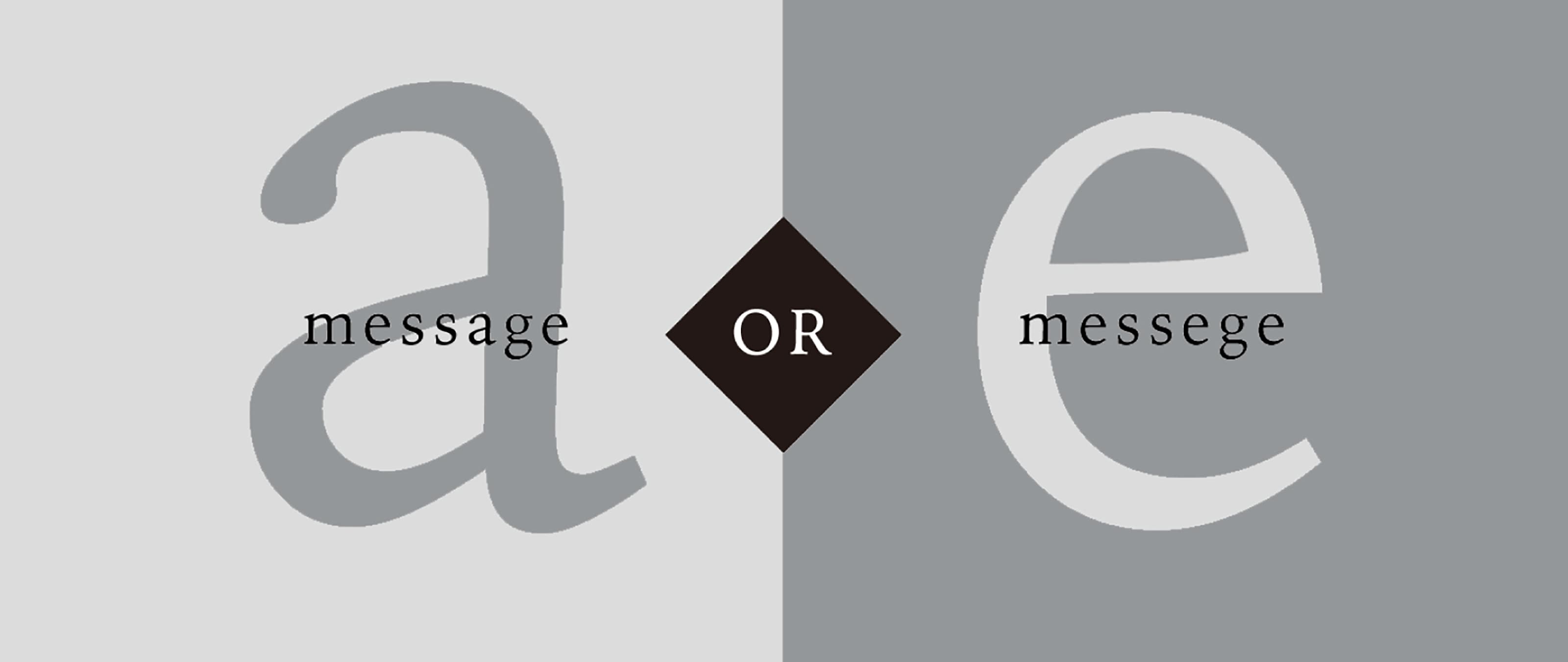
| messege | message | メッセージ |
| manegement | management | マネージメント |
| intarnship | internship | インターンシップ |
| corporete | corporate | コーポレート |
| membar | member | メンバー |
| calender | calendar | カレンダー |
こちらの原因も上記の1番のスペルミスに似ています。英語の実際の発音がカタカナ表記と同じですが、スペルが異なります。
5. Confusing “a” and “o”
| よくあるスペルミス | 正しいスペル | 日本語表記 |
|---|---|---|
| campany | company | カンパニー |
| keyward | keyword | キーワード |
| netwark | network | ネットワーク |
| errar | error | エラー |
| inbaund | inbound | インバウンド |
こちらの原因も上記の1番のスペルミスに似ています。英語の実際の発音がカタカナ表記と同じですが、スペルが異なります。
6. Confusing “n” and “m”
| よくあるスペルミス | 正しいスペル | 日本語表記 |
|---|---|---|
| canp | camp | キャンプ |
| menber | member | メンバー |
| imformation | information | インフォメーション |
| emvironment | environment | 環境 |
| conplete | complete | 完了 |
ローマ字表記を見ると、日本語の「ん」が「n」と表記されている場合と「m」と表記されている場合があります。そのため、日本人は英語の単語を書くときに「n」と「m」を混乱してしまい、スペルミスすることが多いです。
7. Confusing “a” and “u”
| よくあるスペルミス | 正しいスペル | 日本語表記 |
|---|---|---|
| prodact | product | プロダクツ |
| pablish | publish | パブリッシュ |
| sapport | support | サポート |
こちらの原因も上記の1番のスペルミスに似ています。英語の実際の発音がカタカナ表記と同じですが、スペルが異なります。
Conclusion
Looking ahead, more Japanese companies will expand overseas, while the number of international visitors and foreign residents in Japan will continue to increase. As a result, opportunities for foreign users to view Japanese websites will grow, and the use of English in web production will inevitably become more common.
In such a context, there is no disadvantage in using correct English expressions. On the contrary, proper usage can further enhance the overall quality of a website’s design. Moving forward, by being mindful of the common pitfalls introduced in this article, and by developing the habit of verifying English expressions with a dictionary rather than relying solely on katakana, we can effectively avoid spelling mistakes.
RECENT POSTS

Vol.198
From parent–child bonds to community: The future of education that nurtures diversity and designs relationships

Vol.197
Exploring the future of environmental design integrating vision, diversity, and a future-oriented perspective

Vol.196
Vision-making for diverse and future-oriented education: Interpreting the future of learning through environmental design

Vol.195
“One Health” and Japan — Toward an Era of Integrating Humans, Animals, and the Environment

Vol.194
The benefits and challenges of digital education in the AI era, and the future of learning

Vol.193
Vision-Making in the age of AI — How artificial intelligence is transforming the meaning of work and the nature of organizations