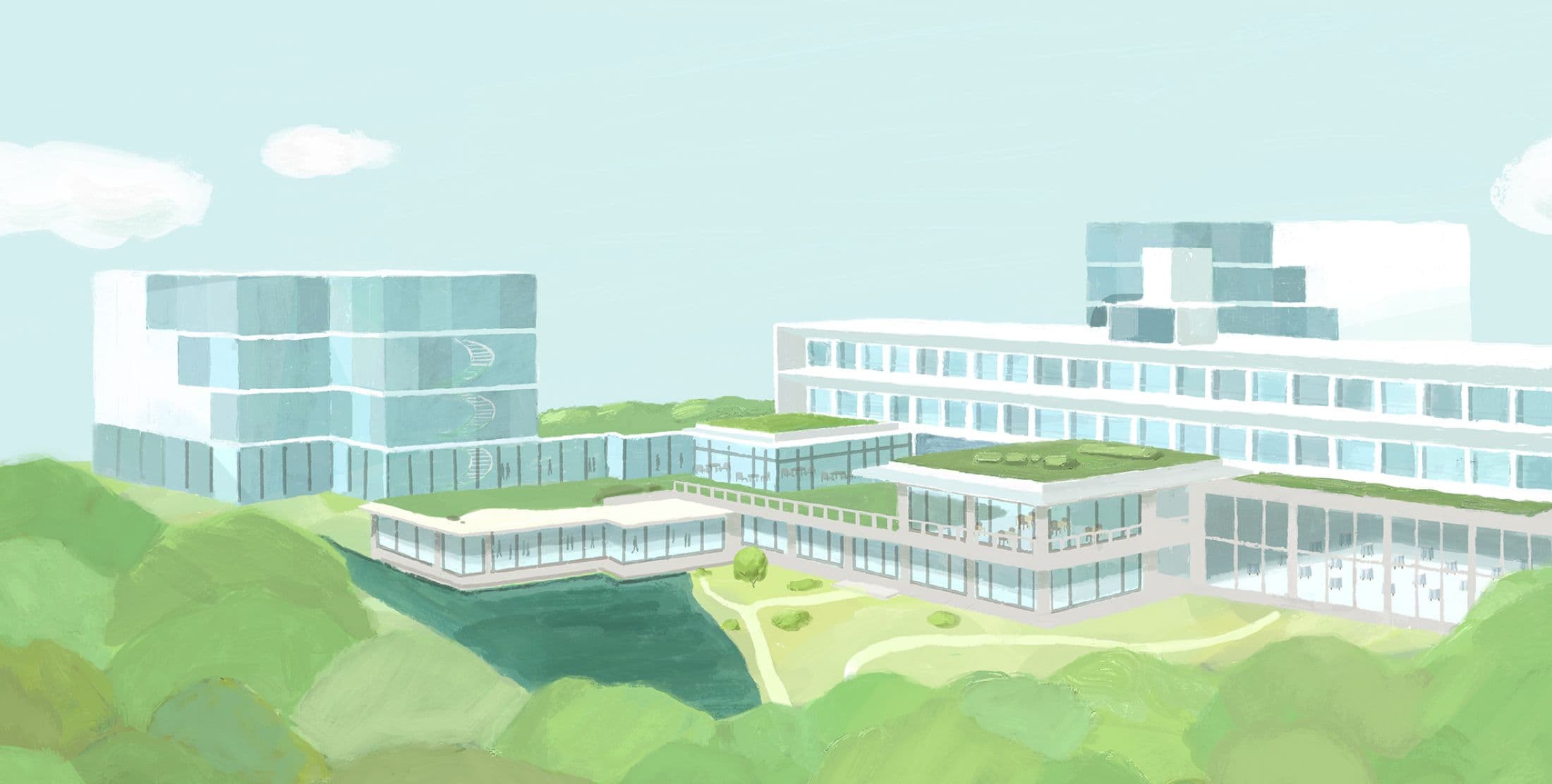
The International House of Japan
Reconstructing a “Knowledge Hub” for the Asia-Pacific Region
A project that integrated intellectual activities and research functions to redesign how knowledge is opened and experienced by society
The International House of Japan has long served as an organization that connects Japan and the world through international exchange and intellectual dialogue.
In recent years, the organization expanded its think tank capabilities through integration with the Asia Pacific Initiative (API), with the goal of strengthening research activities and policy engagement across the Asia-Pacific region.
At the same time, as the organization grew, its websites and information assets became fragmented across multiple domains, making the relationships between activities and the organization’s overall structure difficult to understand from the outside.
Because different intellectual activities existed as separate information assets, it became increasingly difficult to understand the International House of Japan’s activities as a whole — including international cultural exchange, research initiatives, and policy proposals.
In addition, while the existing websites contained a large amount of advanced information related to research and policy, they were difficult for first-time visitors to navigate intuitively. Users often struggled to understand what the organization actually did or where they should begin.
The information architecture was also designed with prior knowledge and contextual understanding in mind. As a result, while existing stakeholders could access the content, new audiences, overseas users, and general participants often found it difficult to connect with or participate in the organization’s intellectual activities.
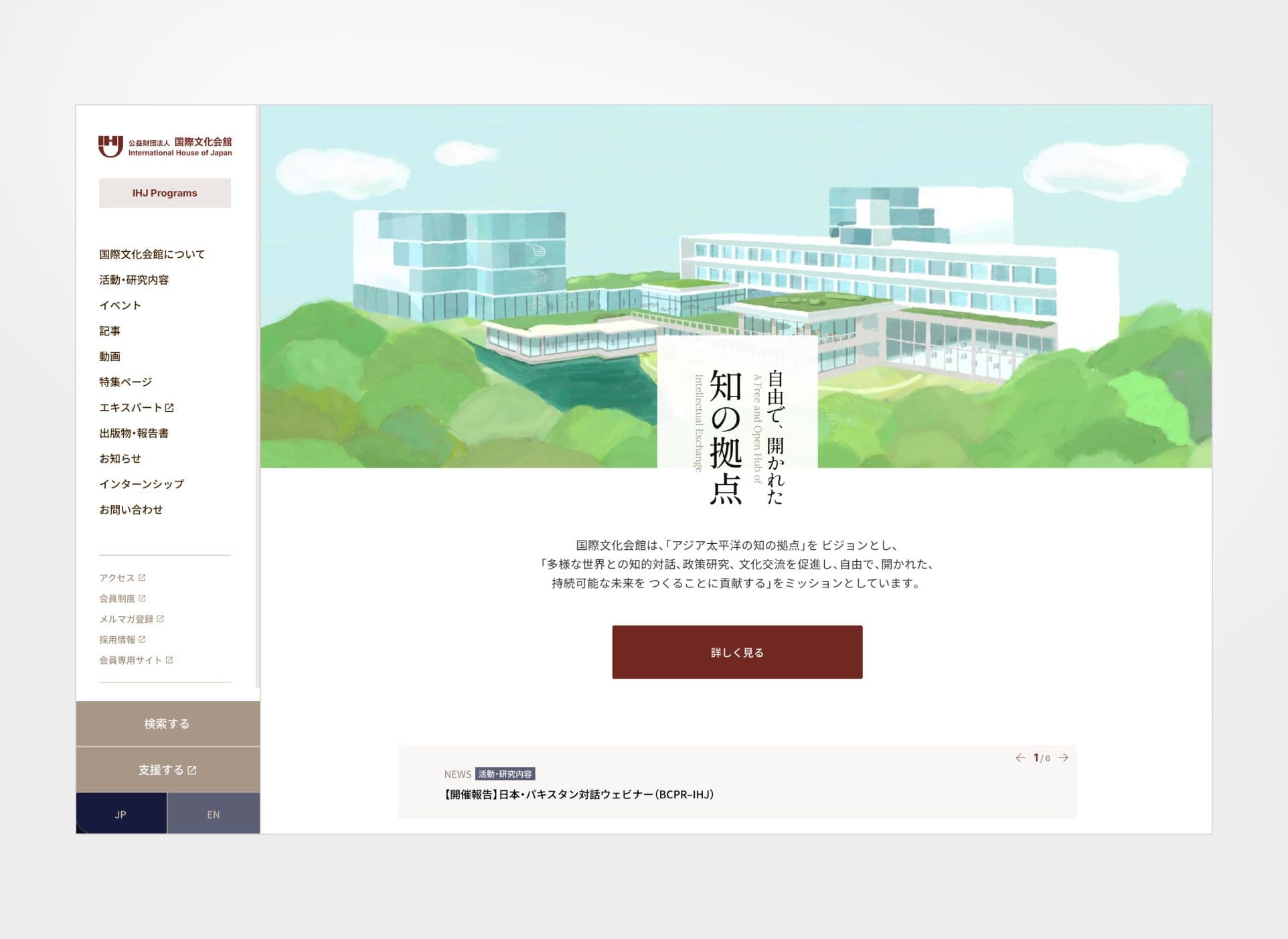
This project reorganized and integrated dispersed research and program functions into an independent “Program” platform, establishing a new brand foundation that communicates the International House of Japan’s vision of becoming a “knowledge hub for the Asia-Pacific region.”
More than a website integration project, this initiative was also an effort to redesign how knowledge could be opened to society and how international dialogue could be connected to future generations.
Context
Fragmented information structures were making participation in knowledge difficult
The International House of Japan conducted a wide range of intellectual activities, including international exchange, research initiatives, and policy engagement. However, because each activity existed within separate websites and information structures, it became difficult for outside audiences to understand the organization’s broader purpose and direction.
Particularly after the integration with API expanded its research and think tank capabilities, the existing information architecture could no longer effectively communicate the organization’s evolving structure and growing scope of activities.
There were also large volumes of reports, events, programs, and policy-related content, but these assets were not sufficiently connected to one another. As a result, users struggled to understand the broader context behind the organization’s intellectual activities.
In addition, the site structure itself had become increasingly complicated. Users frequently encountered broken navigation paths, disconnected experiences, and situations where they were redirected to external websites in the middle of their journey.
This created a gap between the organization’s philosophy of “opening knowledge to society” and the actual user experience. Many visitors felt that the activities were difficult to understand, that they did not know where to begin, or that they could not find information relevant to them.
The International House of Japan was never intended to function merely as a research institute or cultural facility. Its true goal was to become a platform for intellectual exchange — a place where people from diverse backgrounds could gather, engage in dialogue, and create new knowledge together.
However, because information and activities were fragmented, that vision and organizational identity were not being fully communicated.
The project therefore required not only reorganizing information, but also redesigning the overall brand experience and the way intellectual exchange itself could connect with society.
Approach
From “a website for insiders” to “an open platform for knowledge”
This project redefined the Program site not as a simple information hub, but as a platform where users could understand and engage with the International House of Japan’s intellectual activities in a holistic way.
By integrating previously dispersed research and program functions, the platform connected events, research, policy initiatives, and international dialogue within a single narrative and conceptual framework.
Rather than simply listing information, the project focused on building a brand communication experience that naturally conveyed what kinds of dialogue the International House of Japan sought to create and what kind of future it aimed to shape.
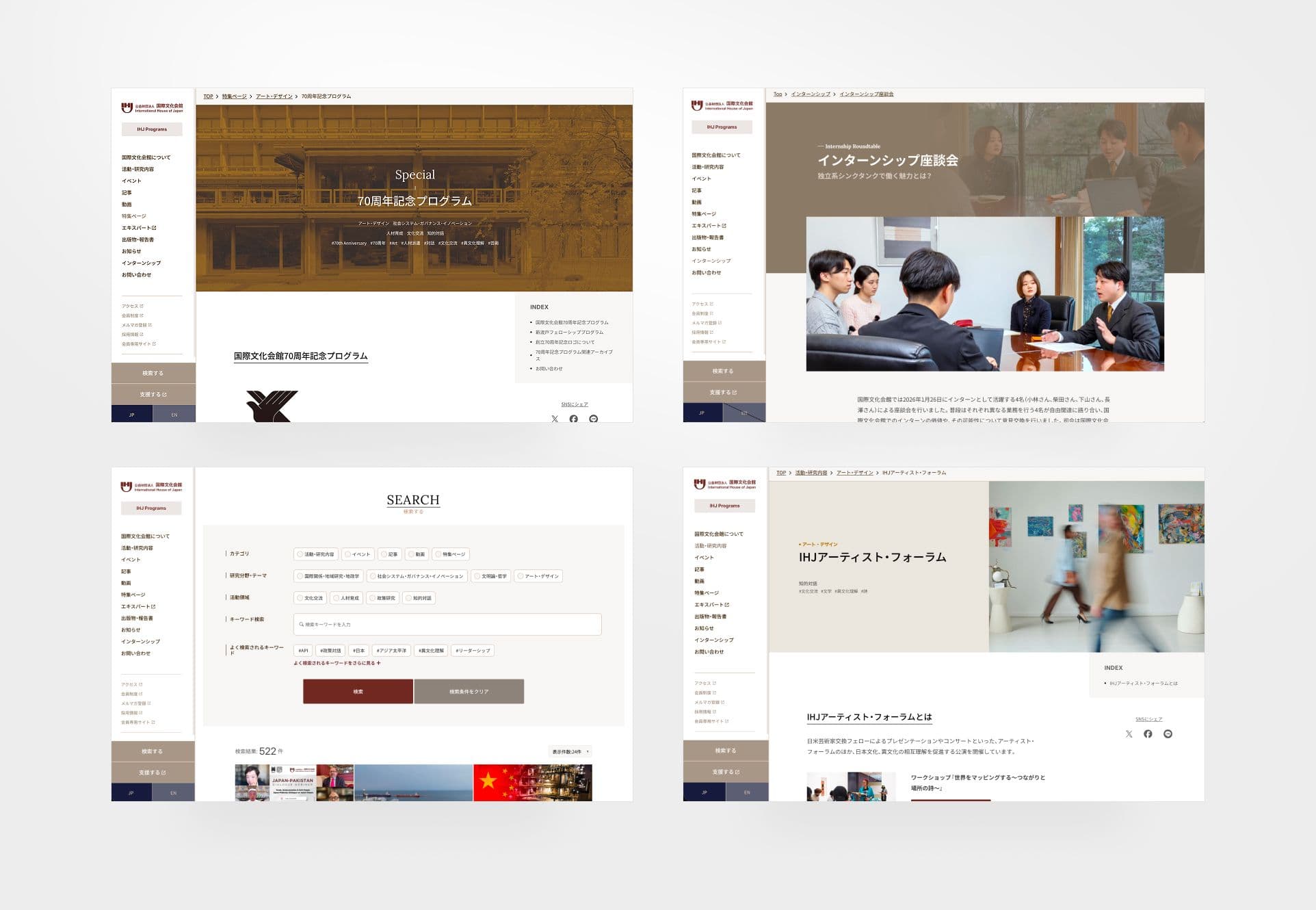
The information architecture was also redesigned around a clearer understanding of audience needs. Navigation and user flows were rebuilt so that not only experts, but also general participants and international users, could intuitively access the information most relevant to them.
Research themes, activity areas, events, and archives were connected across the platform, transforming scattered knowledge into a unified intellectual experience.
The project also emphasized creating a brand experience in which users would not simply consume research or policy content, but feel invited to participate in intellectual dialogue themselves.
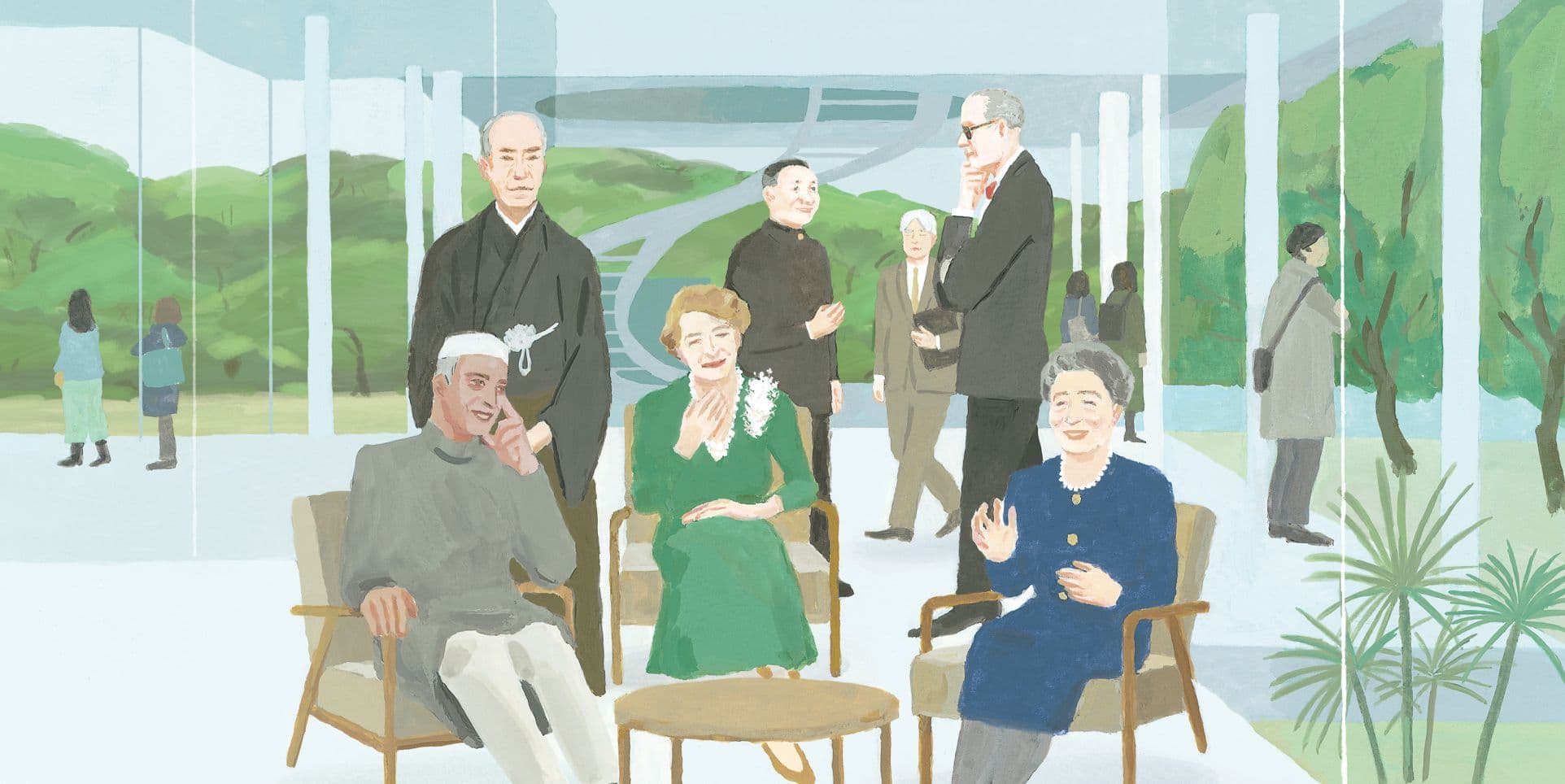
Furthermore, by visualizing the International House of Japan as a crossroads where researchers, policymakers, cultural leaders, and next-generation thinkers intersect, the project helped redefine the organization’s identity as a hub for intellectual exchange across the Asia-Pacific region.
This project was designed not as a “website for publishing research,” but as a brand experience that opens intellectual activity itself to society.
Outcome
Dispersed intellectual activities became a unified “knowledge experience”
As a result of these efforts, the Program platform evolved beyond a simple research and event information website and became a new kind of platform supporting intellectual exchange throughout the Asia-Pacific region.
Users are now able not only to browse individual reports or events, but also to understand how different activities connect to one another and how they reflect the International House of Japan’s broader philosophy and vision.
By integrating fragmented information assets, the platform improved access to research and programs while also functioning as a foundation for bringing intellectual activity closer to society.
In addition, redesigning a structure that had previously been accessible mainly to insiders helped create a more open environment for new audiences, general participants, and future stakeholders to engage with the organization’s activities and ideas.
Through this project, the concept of “opening dialogue and intellectual exchange to society,” rather than simply publishing research results, became part of a new direction for the International House of Japan’s brand communication.
Ultimately, this project became an initiative that communicated the International House of Japan’s vision of becoming a “knowledge hub for the Asia-Pacific region” through organizational structure, information design, and brand experience.
This project was not simply about organizing information. It was rooted in the idea of opening intellectual exchange to society.
It became an effort to rebuild the foundation for intellectual exchange — a place where diverse people and ideas intersect to create new dialogue and value.
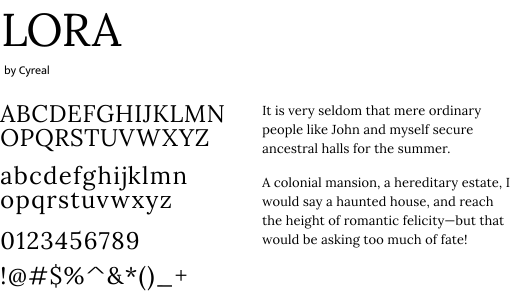
Type
faces
Color
Schemes
RGB / 248 246 245
CMYK / 0 1 1 3
HEX #f8f6f5
RGB / 103 54 50
CMYK / 0 73 58 74
HEX #673632
RGB / 24 27 57
CMYK / 58 53 0 78
HEX #181b39



NEXT
ZUNO